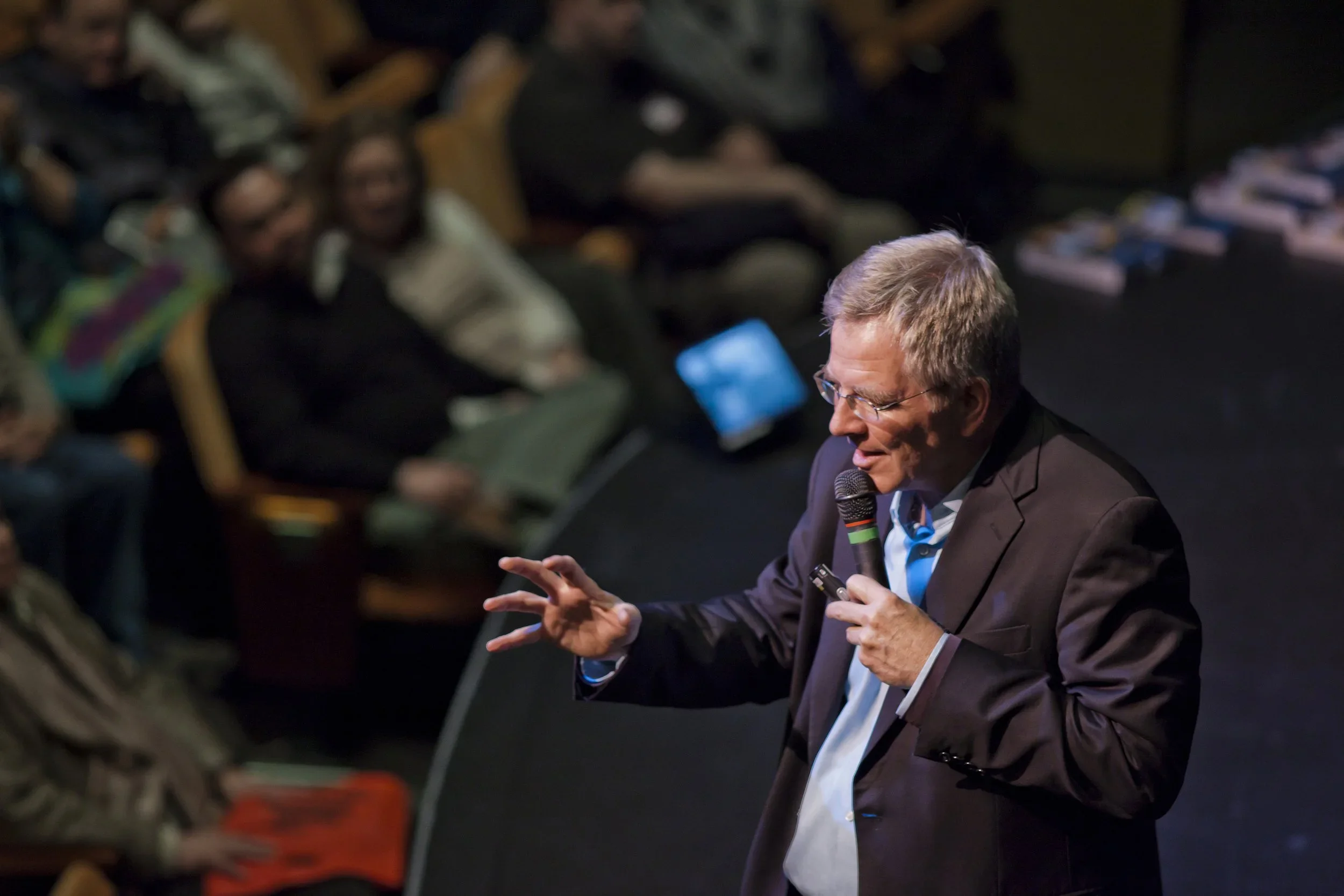
Rick Steves on Music, Travel, Beethoven, and the Art of Listening
Conductor Devin Patrick Hughes sits down with travel writer and television host Rick Steves for a special episode of One Symphony, exploring how music and travel can deepen our understanding of culture, history, and one another.
Before Rick Steves became one of America's most recognizable travel personalities, he was a piano teacher with 50 students. His father was a band director and piano technician, and Rick's first experiences traveling through Europe were connected to family visits to German piano factories.
In a wide-ranging conversation on One Symphony, conductor Devin Patrick Hughes explores this lesser-known chapter of Steves' life and the surprising connections between his two lifelong passions.
"I've always considered myself a teacher," Steves explains. "I've only had two jobs in my whole life, teaching piano and teaching travel."
For Steves, the connection is more than biographical. As a piano teacher, he learned to introduce students to unfamiliar music through pieces they already enjoyed, gradually opening their ears to Bach, Beethoven, and the classical repertoire. He now approaches travel in much the same way, helping people find an accessible entry point into unfamiliar cultures.

Hearing the World Differently
What can music reveal about a culture that its museums, architecture, food, or history cannot?
That question takes Hughes and Steves from the flamenco traditions of Andalusia to the intimate fado performances of Portugal, the traditional music of Ireland, and the Norwegian landscapes that inspired Edvard Grieg.
Steves recalls how music can communicate the experiences of a people even when the listener doesn't understand the language. In Portugal, for example, he describes hearing the emotional weight of generations of hardship, longing, and resilience expressed through fado.
Their conversation also explores the importance of historical context. Understanding the world in which a composer lived can transform the experience of hearing a familiar piece.
"The more context you have, the more you can get out of it," Steves observes.
For Hughes, whose work as a conductor frequently involves exploring the cultural and historical circumstances surrounding a composition, this connection between place, history, and musical expression is central to bringing classical music to life.
From Tourist to Traveler to Pilgrim
One of the conversation's most reflective moments concerns Steves' philosophy of travel.
He describes a progression from tourist to traveler to pilgrim: moving beyond sightseeing toward experiences that challenge assumptions, encourage empathy, and deepen our understanding of ourselves and others.
"Culture shock is a constructive thing," Steves says. "It's the growing pains of a broadening perspective."
Music, the two suggest, can offer a similar experience. A performance can invite listeners into another culture, another historical moment, or another person's emotional world without requiring them to leave their seats.
Their discussion touches on music's ability to create a sense of shared experience, whether in a concert hall, a neighborhood gathering, or a spontaneous musical encounter while traveling.
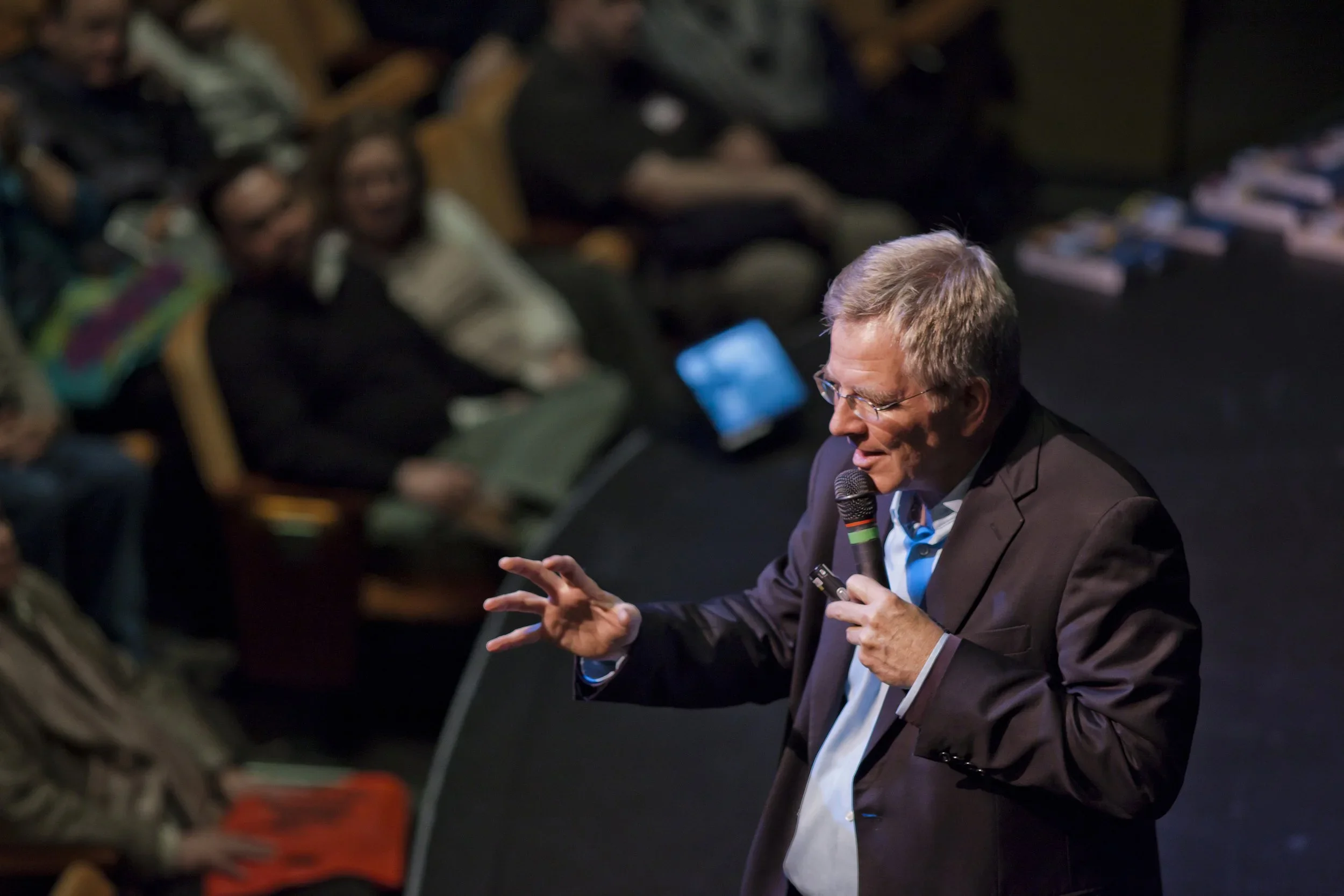
Beethoven, National Identity, and Our Shared Humanity
The conversation also examines Rick Steves' Europe: A Symphonic Journey, a multimedia orchestral program presented in Colorado by Boulder Symphony & Music Academy and Symphony of the Rockies under Hughes' direction in October 2026.
Featuring music by Strauss, Wagner, Smetana, Elgar, Verdi, Grieg, Saint-Saëns, and Beethoven, the concert explores how composers expressed the landscapes, histories, aspirations, and national identities of their homelands.
Hughes and Steves discuss the relationship between musical nationalism and cultural understanding, culminating in Beethoven's Ode to Joy from the Ninth Symphony.
Hughes suggests that Beethoven's aspiration to unite people through music shares something with Steves' mission to encourage travelers to see the world through the eyes of others.
Steves embraces the connection, reflecting on the composers as cultural voices whose music helped express the hopes and struggles of their societies.
For both, the larger message is that appreciating the distinct identities of different cultures need not divide us. It can help us recognize the experiences and aspirations we share.

Making Classical Music Accessible
Steves sees A Symphonic Journey as an invitation to audiences who might not ordinarily attend an orchestral concert.
"This concert is designed for people who didn't know they liked classical music," he explains.
It is a philosophy that resonates with Hughes' approach to performance and music education: providing audiences with meaningful context while allowing the music itself to communicate.
The conversation ultimately becomes an exploration of curiosity, listening, and the value of encountering something unfamiliar.
From piano lessons and European travels to Beethoven's vision of fellowship, Hughes and Steves discover a common thread: music and travel can expand our understanding of the world, and perhaps our understanding of one another.
Watch or Listen to the Full Interview
Hear the complete conversation between Devin Patrick Hughes and Rick Steves on One Symphony, available on YouTube, Apple Podcasts, Spotify, and other major podcast platforms.
Discover Rick's musical beginnings, his reflections on European culture, and the ideas behind Rick Steves' Europe: A Symphonic Journey.
Learn more about the concert project:
https://www.ricksteves.com/symphony