By Devin Patrick Hughes
Conductor and Artistic Director
Thomas Wolf’s recent article about the Boston Symphony Orchestra raises questions that extend far beyond Boston. What does excellence mean for an orchestra today? What should we expect from a music director? How can orchestras remain financially sustainable, artistically ambitious, and genuinely connected to their communities?
These are not theoretical questions for those of us leading orchestras. We confront them every day.
The challenges may look different depending on an organization’s size, history, and resources, but the underlying questions are remarkably similar. Who are we serving? Why should our community care that we exist? How do we preserve the extraordinary artistic tradition of the orchestra while allowing the institution surrounding it to evolve?
Having founded and developed two orchestras, and worked with a plethora of arts groups, I have learned that the future of our field will not be secured by a single innovation or programming trend. It will depend upon a broader understanding of excellence, leadership, community, and institutional purpose.
Here are several guideposts that may help us move forward.
Excellence is more than what happens onstage
Musical quality is essential. Audiences deserve performances of imagination, depth, and the highest possible artistic standard. But artistic excellence alone is no longer an adequate measure of an orchestra’s success.
We must also ask who an orchestra reaches, who feels welcome, and whether the community considers the organization part of its cultural life.
Excellence can mean a powerful performance of Beethoven’s Ninth Symphony. It can also mean a sensory-friendly concert for neurodiverse audiences, a program designed for people living with dementia, a scholarship that allows a student to continue music lessons, or a veteran attending a symphony concert for the first time.
These experiences do not diminish artistic ambition. They give that ambition purpose.
Orchestras should measure ticket sales, donations, and financial performance. We should also measure student participation, audience retention, accessibility, community partnerships, and the number of people who begin to think of the orchestra as their orchestra.
The modern artistic director must be present
The role of the music director or artistic director has changed. Conducting remains at its center, but today’s artistic leader must also be a communicator, fundraiser, programmer, educator, collaborator, and visible presence in the community.
Presence matters.
An artistic director cannot understand a community entirely from the podium or through a handful of concert weeks each year. Leadership requires conversations with musicians, students, donors, board members, teachers, business owners, civic leaders, and people who may never have attended an orchestra concert.
This expanded role demands a great deal from conductors, but it also creates tremendous opportunities. Programming becomes more informed. Partnerships become more authentic. Fundraising becomes connected to a shared vision rather than a generic appeal for support.
The artistic leader does not need to perform every organizational function. Sustainable leadership requires a strong team, clear responsibilities, and systems that do not depend upon one person. But artistic vision, institutional strategy, and community purpose must remain closely connected.
The entire community is our concert hall
One of the most important lessons I have learned is that access cannot be achieved solely by offering discounted tickets to a traditional concert.
For many people, price is not the only barrier. The venue may feel unfamiliar. The conventions may seem intimidating. Transportation, disability access, family responsibilities, sensory needs, or a feeling that classical music is “not for people like me” may keep someone away.
If people will not come to the concert hall, the orchestra must go to them.
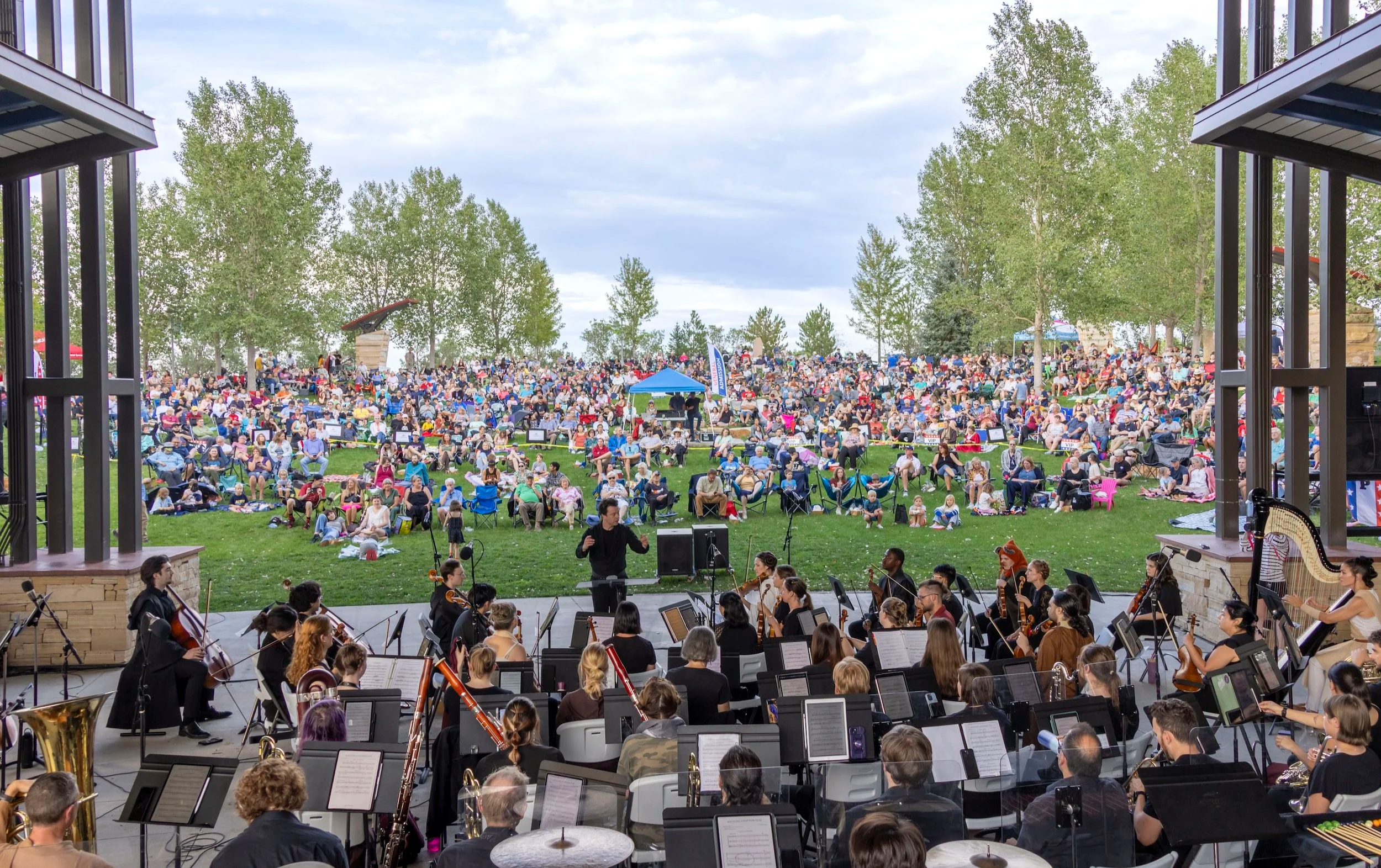
That may mean performing in schools, libraries, senior communities, parks, shelters, workplaces, community centers, and other gathering places. It may mean creating sensory-friendly events, programs for people living with dementia, student concerts, public celebrations, or performances designed for nontraditional spaces.
These activities are not accessories to the “real” work of an orchestra. They are part of the real work.
At the same time, community engagement must be thoughtful. An organization can exhaust itself by pursuing every worthy opportunity. Each initiative should respond to an identified need, involve a trusted community partner, and have the artistic, financial, and organizational resources necessary to succeed.
Partnerships are fundamental, not ornamental
Orchestras often think first about partnerships with other large cultural institutions. Those collaborations can be valuable, but some of the most meaningful relationships are built with smaller organizations that possess deep community knowledge and trust.
Partnerships can help orchestras reach students, veterans, people experiencing homelessness, neurodiverse individuals, older adults, and communities affected by illness or isolation. They can also bring orchestras together with dancers, composers, schools, libraries, businesses, healthcare providers, and social service organizations.
The best partnerships do more than divide expenses or place two logos on a poster. They create something that neither organization could accomplish independently.
Before beginning a collaboration, we should ask:
What new audience will this relationship help us reach? What expertise does each partner bring? What artistic possibilities become available? How will the community benefit? What will make this relationship meaningful beyond a single event?
When partnerships are rooted in shared purpose, they can transform the program, the participating organizations, and the community itself.
Musicians bring more than musical skill
Orchestras must continue hiring superb musicians. Musical excellence must remain the baseline. But the modern musician’s contribution can extend far beyond playing an orchestral part beautifully.
Some musicians are gifted teachers. Others communicate naturally with children, older adults, donors, or first-time concertgoers. Some are skilled chamber musicians, public speakers, composers, marketers, arrangers, nonprofit leaders, entrepreneurs, or digital storytellers.
These abilities should not replace musical standards, but neither should they be ignored.
We need to identify, develop, and compensate musicians who can help fulfill different parts of an orchestra’s mission. A musician who can design an engaging school program or create a meaningful experience in a senior community possesses a professional skill. That contribution should be valued accordingly.
Conservatories also have an important role. Young musicians need opportunities to learn public speaking, teaching, entrepreneurship, community program design, and organizational leadership. These are not fallback skills for those who fail to win an orchestra audition. They are essential components of a sustainable musical life.
The next generation of musicians must learn not only how to perform at the highest level, but also how to explain, share, teach, and advocate for the music they love.
More concerts do not necessarily mean greater impact
Growth is often measured through quantity: more performances, larger ensembles, bigger venues, and longer seasons. But every full-orchestra concert creates significant artistic, financial, and marketing demands.
The question should not be, “Can we add another concert?” It should be, “Why should this concert exist?”
Is there a compelling artistic idea? Is there an audience for it? Is the venue appropriately sized? Is there a partner who expands its relevance? Can ticket revenue, sponsorship, and philanthropy realistically support its cost?
Sometimes the answer is a full symphony orchestra performing a major work. At other times, it may be a string ensemble, recital, lecture-performance, chamber program, community event, or student showcase.
Matching the scale of a performance to its purpose allows an orchestra to expand its presence without constantly adding seats that must be sold.
A smaller, distinctive, well-attended event can create more impact than a larger concert that stretches the organization and plays to an underfilled hall. Being busy is not the same as being effective.
Governance must support the mission
Strong governance is essential, particularly when an orchestra has an active artistic leader or a relatively small administrative team.
A board’s role is not to manage daily artistic and administrative decisions. Its responsibilities include safeguarding the mission, providing financial oversight, supporting and evaluating leadership, helping secure resources, managing risk, and keeping the organization focused on its long-term future.
Boards also need meaningful artistic and operational information. Musicians can contribute valuable perspectives to governance, provided that clear policies address conflicts involving compensation, personnel, and contractual matters.
Outside expertise can help as well. Conversations with leaders in philanthropy, audience development, nonprofit management, cultural policy, and regional planning can help a board look beyond its immediate agenda and better understand the forces shaping the organization’s future.
As an orchestra grows, its governance must become stronger without making the institution slower, more political, or less responsive.
Financial sustainability and artistic purpose must be connected
Ticket sales rarely cover the full cost of orchestral performance. Philanthropy is not an optional supplement. It is part of the economic model.
But donors are not inspired by deficits alone. People support organizations because they believe in what those organizations make possible.
Our responsibility is to connect financial needs to visible artistic and community outcomes. A gift might help present a major symphonic work, provide lessons for a student, bring musicians into a school, subsidize tickets for veterans, commission a composer, or create an accessible experience for an audience that has historically been excluded.
That connection requires transparency. Orchestra leaders should understand the true cost of programs, measure results, and be willing to reconsider activities that consume resources without meaningfully advancing the mission.
Financial discipline is not the enemy of artistic ambition. It is what allows artistic ambition to endure.
Remain deeply local
Orchestras now compete for attention with nearly every form of entertainment available on a screen. We cannot win by attempting to outscale global media platforms.
We can, however, offer something they cannot: a live, local, human experience rooted in a particular place.
That means working with local artists, responding to community needs, performing in familiar spaces, building relationships with local organizations, and creating experiences that could not simply be transplanted to another city.
The goal should not be to imitate a larger or more famous institution. It should be to become indispensable to the community an orchestra actually serves.
This is where smaller and regional organizations may have a particular advantage. We can know our audiences personally. We can test an idea, learn from it, and change course. We can build programs around local stories and relationships. We can reduce the distance between the stage and the community.
The challenge is to preserve this intimacy as an organization grows.
Our institutions must evolve without losing the orchestra
The future of the orchestra will not be secured by abandoning the great repertoire, lowering artistic standards, or chasing every passing trend.
It will be secured by placing musical excellence within a broader commitment to education, access, community, and human connection.
We should not force orchestras to choose between tradition and relevance. The great works of the repertoire continue to speak because they address essential human experiences. Our responsibility is to help audiences discover their own relationship with that music while creating space for new voices, new stories, and new forms of participation.
Not every experiment will succeed. Partnerships take time. Community programs require specialized skills. Growth creates new pressures, and financial sustainability remains a constant responsibility.
But experience has convinced me that the orchestra of the future must be more than a series of concerts.
It must be an artistic organization, an educational resource, a community partner, a gathering place, and a champion for the musicians and audiences of the next generation.
The central question is not simply whether orchestras will survive. It is whether our communities will know why they should.
If we remain artistically ambitious, genuinely present, locally rooted, and open to change, I believe they will.